Told by a Teen / Female Founder Stories
From One Tesla Conversation to Octopus EV: Fiona Howarth on Going Electric

Hosted by Siya Kantaria
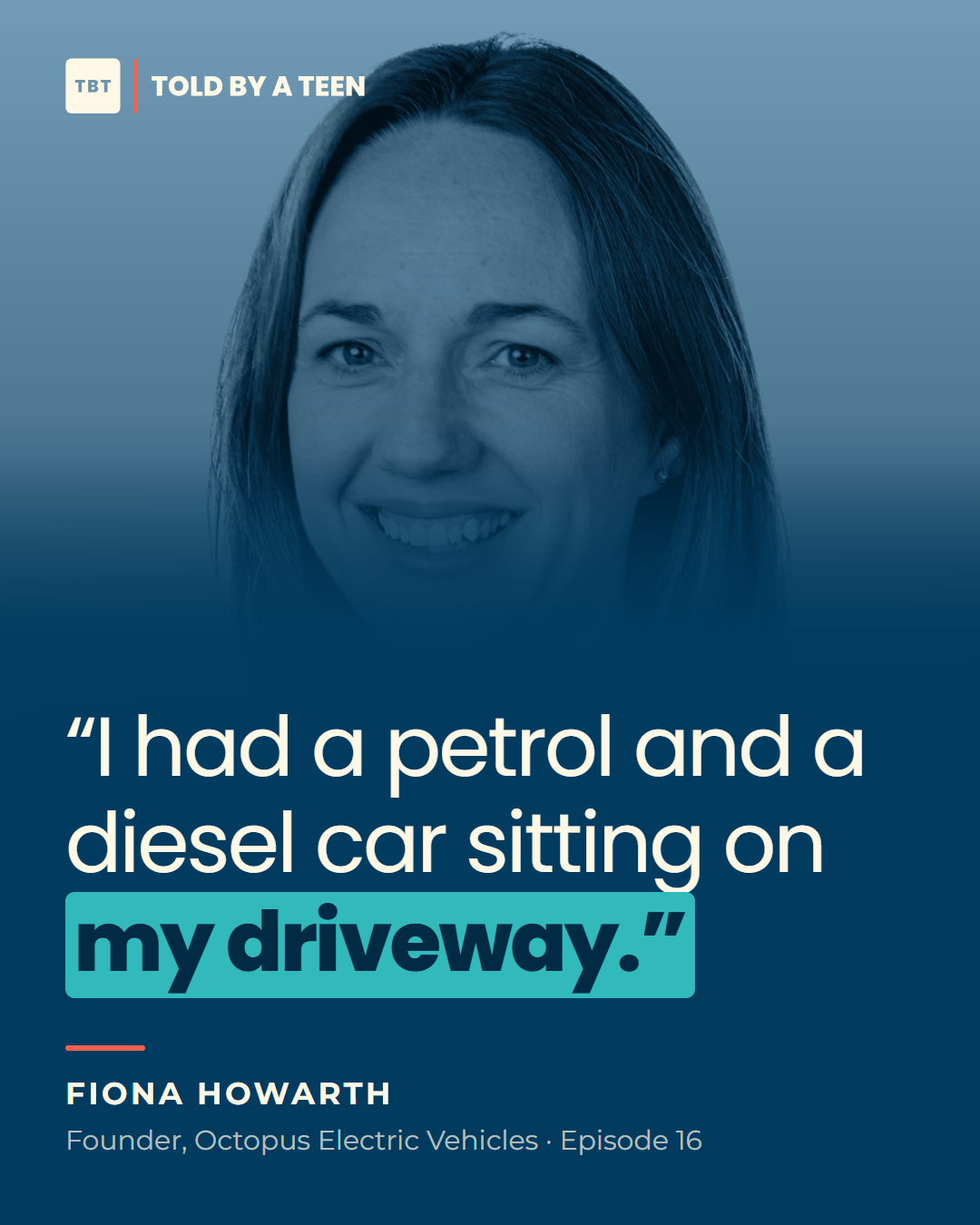
“I had a petrol and a diesel car sitting on my driveway.”
Fiona Howarth, Octopus Electric Vehicles
Show notes
What is in this one.
- 00:00Who Fiona is
- 01:09A physics teacher, the 90s, and running out of fuel
- 03:25The Tesla conversation that started it
- 03:47The things you loved at seventeen keep nudging you
- 04:47What actually put people off electric cars
- 05:07A few hundred people on a green in Harpenden
- 08:33The scheme nine in ten employees don’t know exists
- 12:12Do people miss the feel of a petrol engine?
- 12:45Horses, acceleration, and the guilt of going back
- 14:45Isn’t the upfront cost still too high?
- 15:19Battery prices, $1,000 a kilowatt hour down to $100
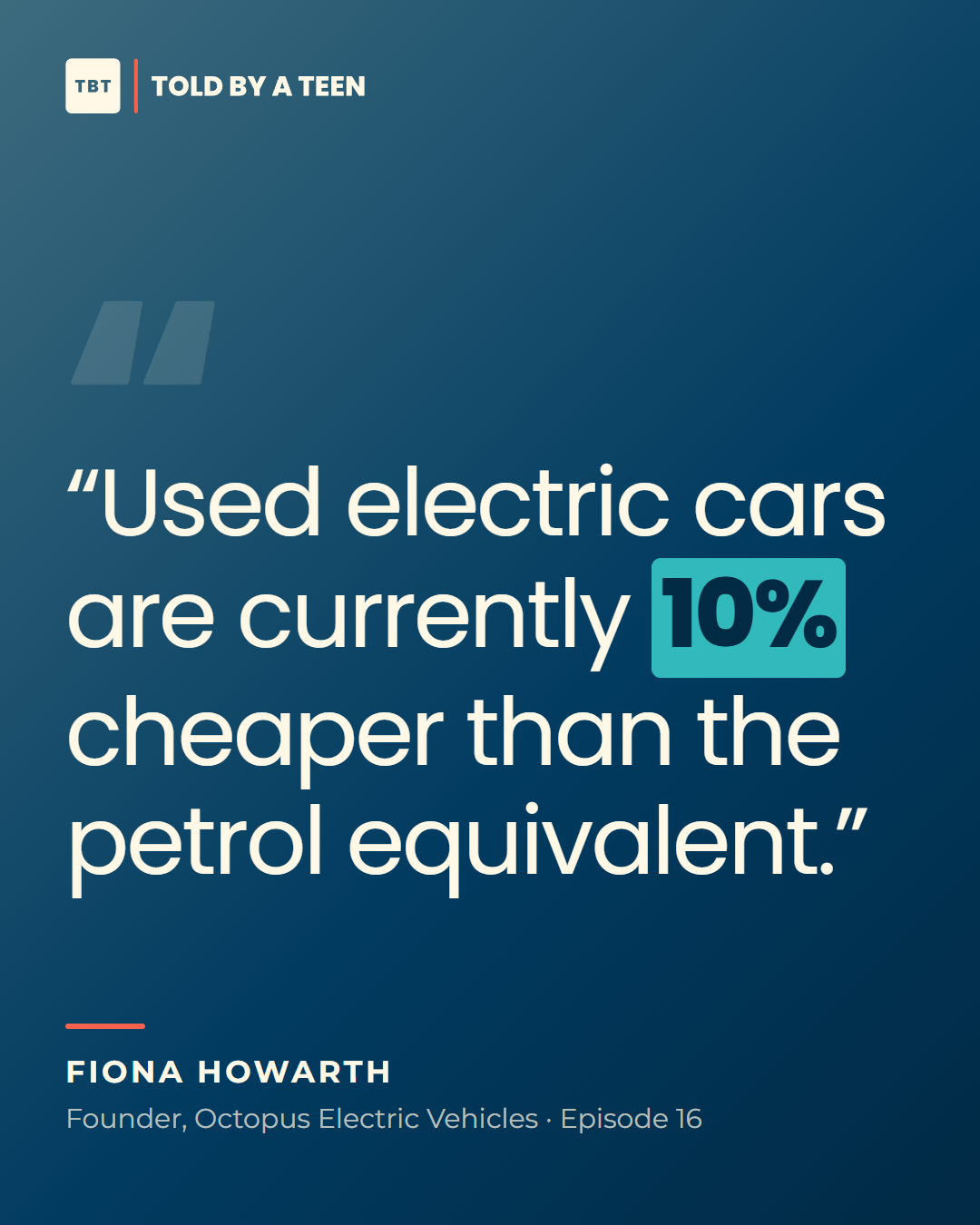
- 17:19Why used electric cars are undervalued
- 18:37Nobody her age drives electric. Is that a market?
- 20:41Satellites, AI, and forecasting the sun
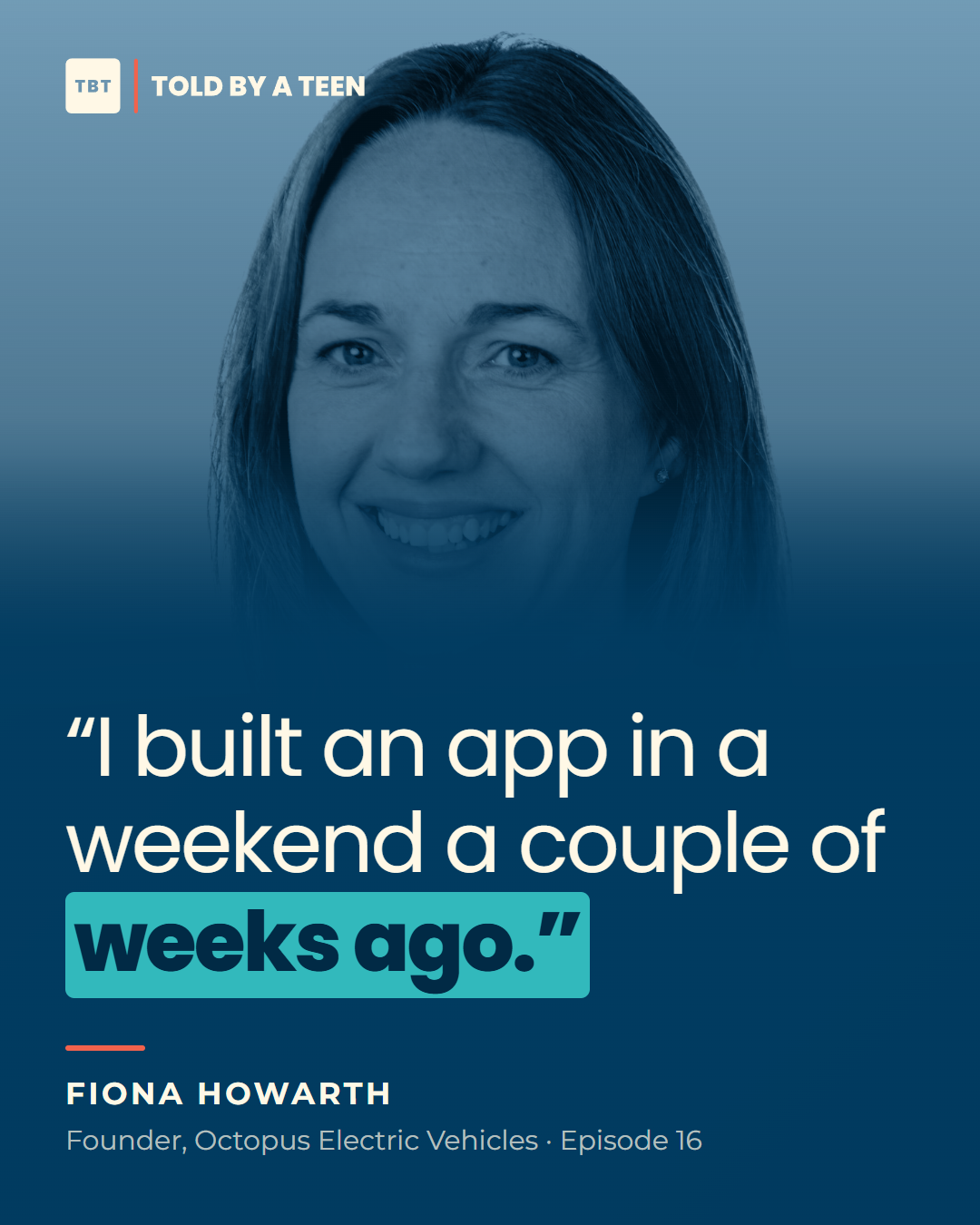
- 23:26Building an app in a weekend
- 24:24Where the price falls actually come from
- 26:59The 2035 ban and 6 billion pounds of private charging
- 29:57The only girl in the technology class
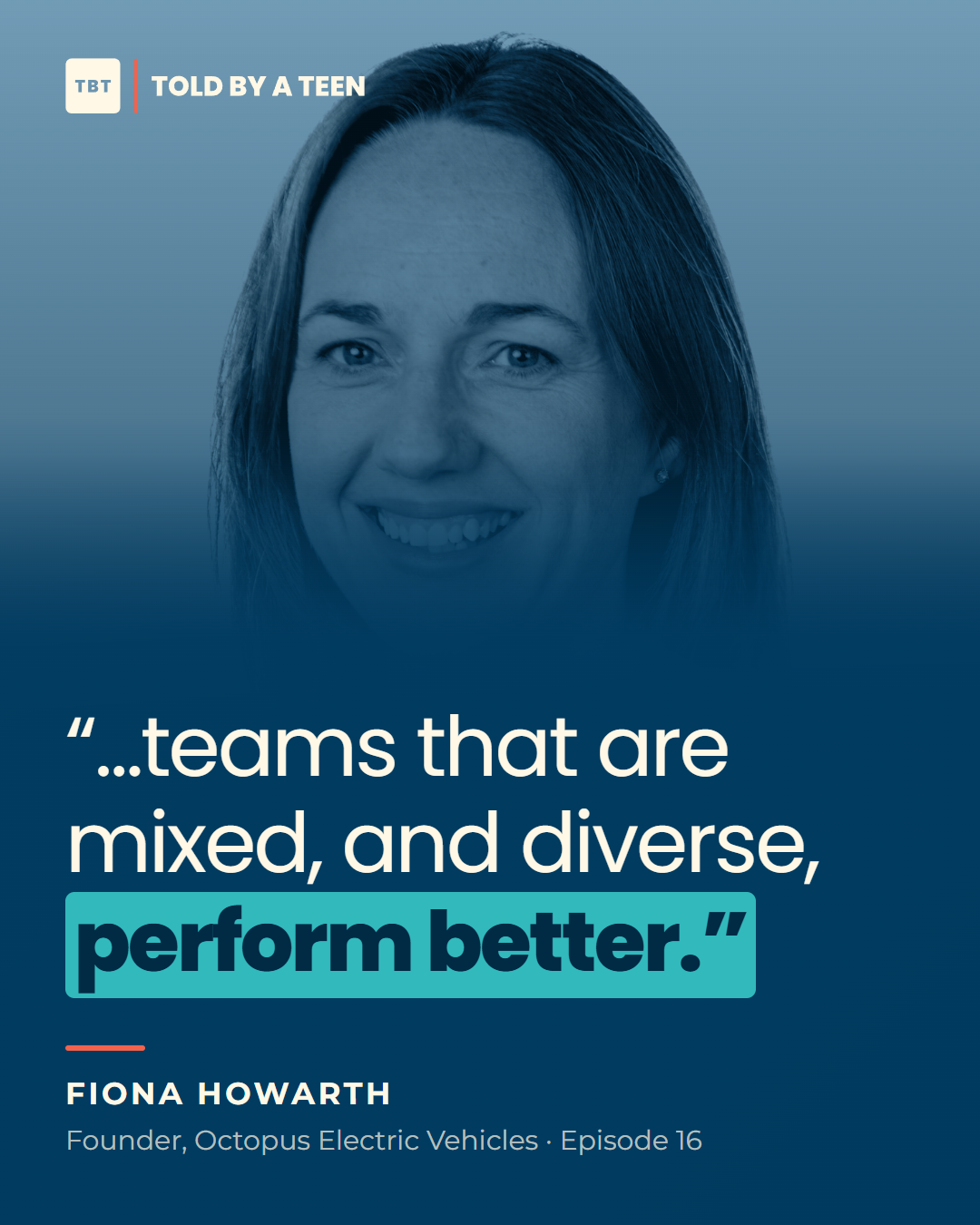
- 35:12Diversity as a performance argument, not a values one
- 38:18The real odds of starting a business
- 39:38Lockdown, two kids, and five hours a day
- 41:44None of us get to work for you if you leave
- 44:39What does success mean to you?
- 47:03My takeaways
The conversation
Fiona Howarth founded Octopus Electric Vehicles after a physics lesson in the nineties stuck. She tested the whole idea by putting some cars on a village green.
A physics teacher and a granny
At school she was taught that we were burning fossil fuels to make energy and that one day they would run out, climate change aside. She liked cars. She wanted to still be able to drive to see her granny. That is genuinely where it starts, and she spent years on the wrong branch of it, going to BMW in Germany to work on hydrogen before deciding electric would get there first.
She mentioned she still thinks somebody should build a chain of music schools. The old ideas keep nudging, apparently.
Flyers, a green, and a WhatsApp group
In 2017 a friend with a Tesla answered all her questions and she decided it was happening. To find out whether anybody else wanted one she did not build anything. She took some cars to the green at Harpenden, posted flyers, put it in the local family WhatsApp groups, and a few hundred people turned up. Five weeks later they ran a hundred and fifty test drives in two days.
No app. No funding round. A green and a WhatsApp group.
Nearly ninety per cent did not know
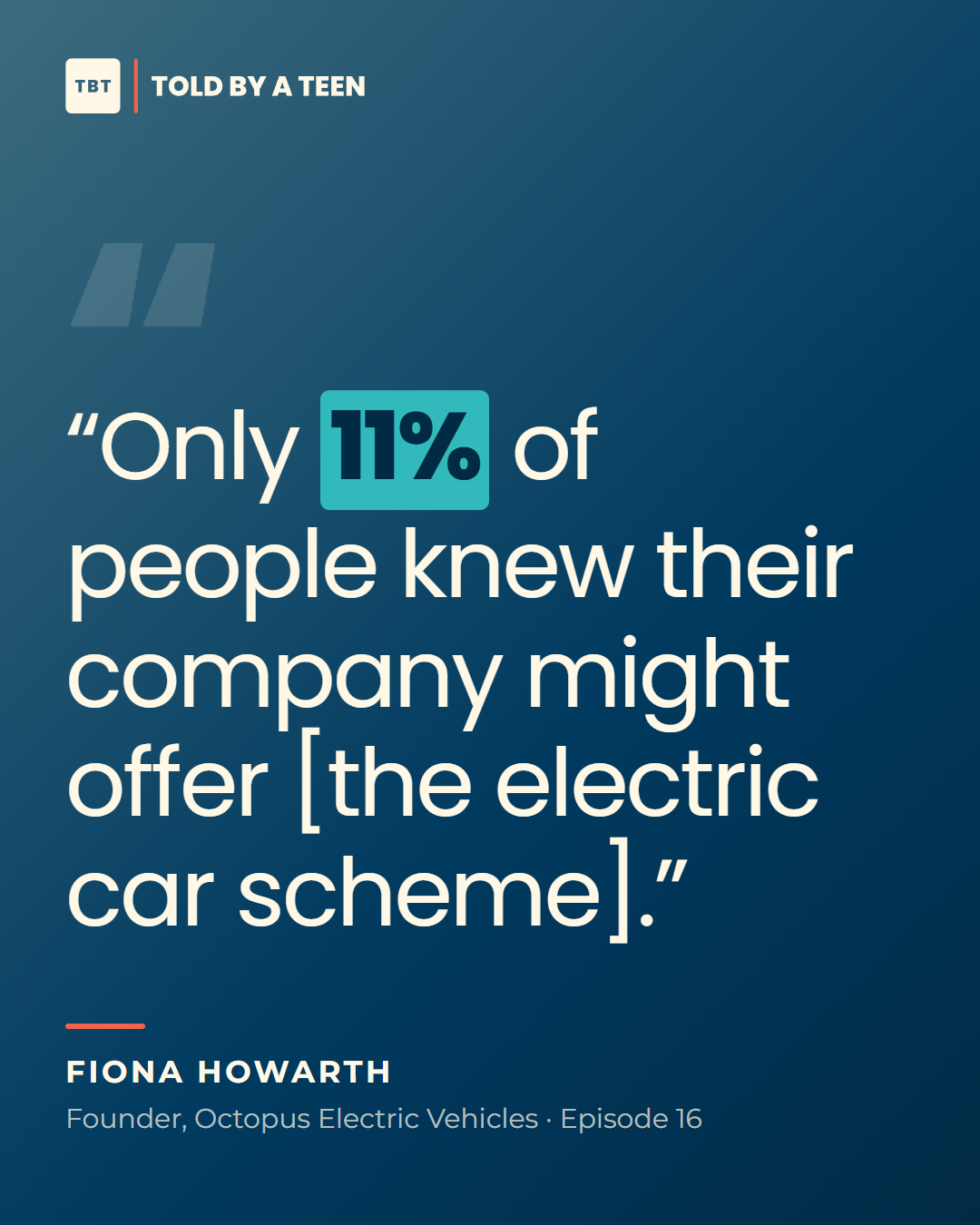
The thing stopping people was cost, and a government scheme called salary sacrifice already fixed a lot of it, letting you pay for the car out of your gross salary. Only eleven per cent of people thought their employer might offer it. Fiona’s business is substantially about closing that gap. Meanwhile battery prices fell from about a thousand dollars a kilowatt hour to about a hundred, which is why the cars themselves got cheap.
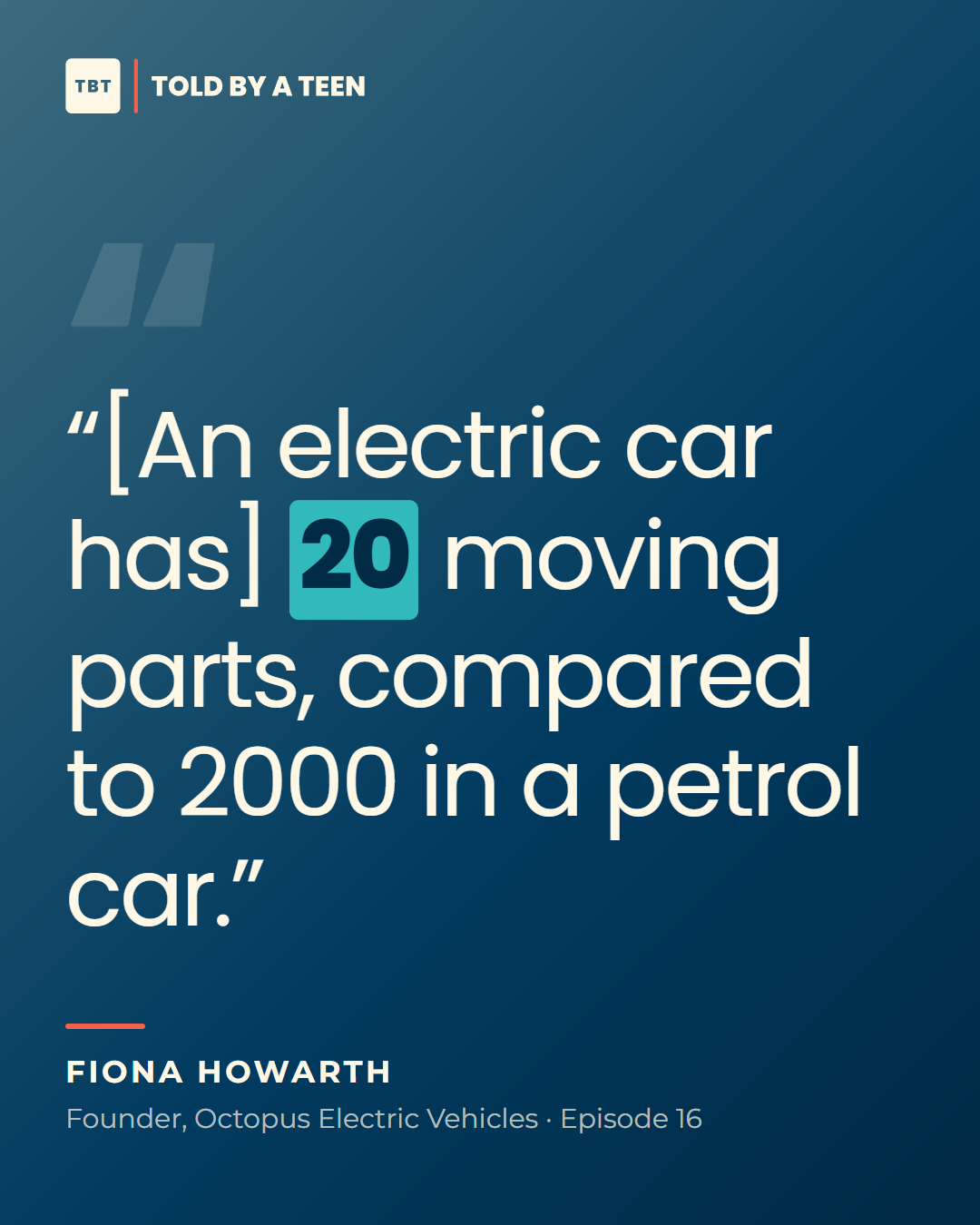
An electric car has roughly twenty moving parts. A petrol one has about two thousand. I did not know that either.
None of us get to work for you if you leave
During lockdown she had two small children, a company, and about five working hours a day. She would not hand any of her team to somebody else because she thought they would feel let down. One of them stayed on the phone with her for two hours and said that line to her. They restructured. Both of those people are still at the business, and the colleague who made the call is now the chief executive.
She said a founder’s job changes every six months. She did not say it like a complaint.
Ninety per cent, and the apology
Women tend to want to tick about ninety per cent of a job description before applying, and then apologise at the interview for the ten per cent they cannot. Men are often comfortable at around sixty, and talk about the sixty. Helen Thomas told me a version of the same thing about trading floors, which is two women in two completely unrelated industries describing one habit.
Fiona has had startups fail. One was ten years too early and she could not sell it, so she stopped and went and did something else. She counts that as a step rather than a scar.
What I took from it
Your original passions never really leave you.
- Being a good leader is mostly being adaptable, and saying so out loud.
- My generation is the next market for this and almost nobody’s talking to us.
- The tooling moved fast. What you build with it is still the hard part.
From this episode
The lines worth keeping.
About the guest
Fiona Howarth
Founder and Chair of Octopus Electric Vehicles, which connects transport, renewable energy and smart technology to make electric vehicles more affordable. Background in engineering and clean tech, and a leading voice on climate innovation and the future of transport.